Sunday, July 7, 2024

Is 5E Really Easier Than 1E? Let's Do Science (Sort Of)! Part II - The Entrance

We begin the adventure.  

Just to be clear, this isn't meant as a review of the editions, or of the adventure.  I'm not going to spend time on the elements that are purely roleplay or irrelevant to the difficulty of the editions.  If you'd like detailed commentary on the module itself, there are loads of them out there.  This is just our experiment on adventuring difficulty.

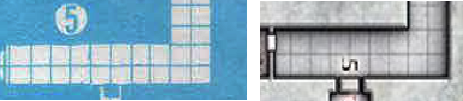
Maps and illustrations will show the 1E version on the left and the 5E version on the right.  

The most observant will notice that both of these 
images depict the same scene.

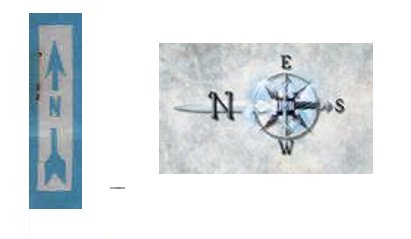
Note that the maps both have the same compass directions in terms of how the dungeon is oriented, but the 5E map had the North pointing to the left of the page.  I want to have North pointing up, so for the sake of consistency, I'll rotate the 5E map 90 degrees right to align the compass roses.

Yes, yes.  We all know 5E is prettier.

The scale of both maps is 1 square = 5'

So, let's head on in...

Not So Fast...

One feature of this dungeon is that the lower levels are filled with poisonous gas.  The way this gas works is different between editions:

1E: The gas inflicts 1-6 hit points of damage per turn (A turn is 10 minutes.)
5E: The gas inflicts 3(1d6) poison damage every hour. 

Various means, both magical and nonmagical, will mitigate the effects.

Area 1: The Vault of Chicomoztoc

This room is... complex.

The party enters the dungeon through a sinkhole/cave in and are sealed inside.

5E:

  Not only is it dark, but light sources don't penetrate far due to the gas in the air.  Each PC lights a torch, casts Light, etc. to have his or her own source of illumination.

  Having the lowest wisdom of the group, Mikhael decides to head straight over to alcove D and picks up a figurine of a red warrior without hesitation.  He examines it briefly and then puts it back on the display.  

Stig, seeing that it had no adverse effect, decides to pick out one or two figurines to keep as souvenirs.  He searches each alcove in turn until he makes his way to niche C and, after failing an investigation check doesn't notice the valuable material used in some of the figurines.  He eventually settles on the panther in the central display and since he likes panthers, slips it into his pack.  Nobody else is near and so they do not notice him doing this, except Nathair who is also at the center display.  She sees him but doesn't care.  

Nathair examines the center display and, after a successful Perception check with Advantage (with help from Stig who is right there with her) notices that the scout figurine is not holding a staff but an actual key.  She checks around to see if there are any noticeable traps on the display and, finding none takes the key off of the scout figurine.  She pockets the key and puts the figurine back.  


Meanwhile, Weyland is examining the door and rolls an Investigation check.  Succeeding, he notices the keyhole.  "Hey!" he says.  "I think we can get out of here if we find a..."


"Key?"  

Weyland is startled as Nathair is suddenly beside him, brandishing the key she found in the center display.  She does this a lot and he hates it because she manages to get him every single time.  Nathair finds it terribly amusing.  The party regroups and Weyland checks again to be sure there are no hidden traps.  He makes another Investigation check and succeeds.  There are no traps to be found so Nathair inserts the key into the lock and turns it.  The door opens easily and the party emerges from the room.

The party spent a little over a minute in the room and has not yet been affected by the poison gas.

1E:

  Not only is it dark, but light sources don't penetrate far due to the gas in the air.  Each PC lights a torch to have his or her own source of illumination.

  Having the lowest wisdom of the group, Mikhael decides to head straight over to alcove D and picks up a figurine of a red warrior without hesitation.  He examines it briefly and then puts it back on the display. 

Stig, seeing that it had no adverse effect, decides to pick out one or two figurines to keep as souvenirs.  He searches each alcove in turn and can see the figurines are somewhat valuable, but he doesn't bother to collect them because they are fragile and likely to break once inside his pack anyway.  Still, he wants a souvenir.  He eventually settles on the panther in the central display and since he likes panthers, slips it into his pack.  Nobody else is near so they do not notice him doing this. 

Nathair examines the center display and notices that the scout figurine is not holding a staff but an actual key.  She asks Stig to check the display for traps on the display.  Stig finds none.  (He failed his Find Traps roll but there is no trap so it doesn't matter.) Nathair takes the key off of the scout figurine.  She pockets the key and puts the figurine back. 

Meanwhile, Weyland is examining the door he notices the keyhole.  "Hey!" he says.  "I think we can get out of here if we find a..."

"Key?"  

Weyland is startled as Nathair is suddenly beside him, brandishing the key she found in the center display.  She does this a lot and he hates it because she manages to get him every single time.  Nathair finds it terribly amusing.  

The party has now spent enough time breathing the poison gas that it starts to take its toll.  Each PC takes damage and they realize they must move more quickly to get out of here before they're overcome.  

The party regroups and Stig checks the door for traps.  There are no traps to be found so Nathair inserts the key into the lock and turns it.  The door opens easily and the party emerges from the room.

The party spent a little over ten minutes in the room and is taking damage from the poison gas.

Comments:

I found two things to be noteworthy here.

First, when a PC investigates something in 1E, they simply find it unless it's well hidden, in which case the DM would secretly roll to see if the PC finds something.  This would usually be in cases where there's a false bottom to a drawer or a concealed niche in the wall.  Otherwise, the PCs don't need to roll, although it is a common house rule to have the PC roll some sort of check, either Int or Wis.

Second, the gas is much more dangerous in the 1E version because the DM rolls damage every ten minutes rather than per hour.  That isn't because of the system per se, but it does reflect the mentality of the 1E designers.  This first room would naturally take a lot of time to search, and this is presumably meant to convey to the players that they don't have time to dawdle.  Sadly, in my damage rolls, it seems the PCs with the fewest hit points took the most damage.  Weyland especially will be in trouble soon at this rate.

As a more minor note, the spellcasters are able to cast the Light spell as a cantrip in 5E, which costs nothing whereas it is a 1st Level spell in 1E, so the PCs who could cast Light are still going to use a torch.

Area 2: The Hall of Thrashing Canes

It's a hallway.  I guess.

5E:

  The party proceeds slowly with Mikhael leading.  They keep their eyes peeled as they move.  Mikhael does not notice the pressure plate but Stone does (by making a successful Perception check) before stepping on it, and stops Mikhael from going any further.  Mikhael gingerly steps back from the plate and asks Stig to see if he can disable it using his thieves' tools.  Stig succeeds in disabling the trap and the party moves forward to the double doors at the end of the corridor.

The party spent six minutes in the corridor and is not yet feeling the effects of the gas.

1E:

  The party proceeds slowly with Mikhael leading.  They keep their eyes peeled as they move but cannot afford to spend too much time doing a careful search as the gas is already affecting them.  Fortunately, the trap fails to trigger when they walk over the pressure plate and they make it to the end of the corridor after a minute and a half.

Comments:

Checking for traps in 1E takes a long time, as much as a full minute on something like a door.  Indeed the party cannot afford to spend that kind of time checking every space as they move through the dungeon.  Fortunately, the designer of the module throws the PCs a bone here and the trap only has a 1/3 chance of triggering.  The party was lucky this time.  The trap doesn't really do much in the way of damage, but it will block the passage after it's tripped, and that would be a very serious problem if any PCs are stuck behind it.

The 5E version of the trap always works once enough weight is on it, and does more significant damage.  It also explicitly describes what has to be done to disable the trap and how long it takes.  

So far, the real determining factor is the rate at which the poison gas damages the PCs.  

Area 3: Roost of the Conch


5E:

The party moves into the large room, noticing the large, crayfish-like creature near the boulder.  It has not attacked, and Mikhael slowly steps toward it, hands open.  The creature starts talking rapidly in a language none of the party recognizes.  Its intentions are clear, however, as it raises its claws in the air as a clear threat.  Time is of the essence and Mikhael would rather not spend the time in combat, so he casts Speak With Animals and is able to communicate directly with the beast.  Mikhael makes a Persuasion roll and successfully convinces the creature that the party is not a threat.  After a few moments, Mikhael nods.  "We may not approach it, but it will allow us to go around if we keep our distance."

The party stays close to the wall, working its way to the right until it reaches the door.  It is unlocked, and they move through.

The party has now spent 9 minutes in the dungeon.  No gas effects yet.

1E:

The party moves into the large room, noticing the large, crayfish-like creature near the boulder.  It has not attacked, and Mikhael slowly steps toward it, hands open.  The creature starts talking rapidly in a language none of the party recognizes.  Its intentions are clear, however, as it raises its claws in the air as a clear threat.  Time is of the essence and Mikhael cannot afford to spend too much time with this creature.  Nathair steps forward and casts Speak With Animals and is able to communicate directly with the beast.  She isn't very charismatic so she acts only as an interpreter for Mikhael.  The Reaction Roll for the creature succeeds and Mikhael successfully convinces the creature that the party is not a threat.  Nathair explains to the party "We may not approach it, but it will allow us to go around if we keep our distance."

The party stays close to the wall, working its way to the right until it reaches the door.  It is unlocked, and they move through.

The party has now spent 14 minutes in the dungeon.  No additional gas effects yet.

Comments:

We're now starting to see more of an impact between editions.  Although the encounters were both successfully handled through bargaining, it cost the 5E party nothing, as Mikhael's ability to cast Speak With Animals is an Oath Spell.  In 1E, Mikhael is not yet high enough level to cast spells at all, and so it fell to Nathair to use her 2nd Level Cleric version of Speak With Animals.  She only gets five Cleric spells of second level per day, so the cost is significant.


Area 5: Tomb Stone and Wet Lime

All left turns.  It's like NASCAR.

5E:

The party moves carefully down the corridor, noticing an exposed seam in the wall.  A way out, perhaps?  Mikhael runs his metal gauntlet over the seam and it appears the stone can be moved.  He presses against the stone but it won't budge.  He calls for assistance from the others and is joined by Stone and Stig.  Together they push, but Stig recoils in pain as the acidic lime causes a burn for 1 HP of acid damage.  He quickly wipes his hand off on his breeches.  Mikhail and Stone aren't affected because of their metal gauntlets.  Mikhael offers his shield to Stig and he uses it to push against the stone.  After a minute, the stone plug has been pushed far enough to allow the party to enter the room beyond.

Eleven minutes in.  No gas effect yet.

1E:

The party moves carefully down the corridor, noticing an exposed seam in the wall.  A way out, perhaps?  Mikhael runs his metal gauntlet over the seam and it appears the stone can be moved.  He presses against the stone but it won't budge.  He calls for assistance from the others and is joined by Stone and Stig.  Together they push, but Stig recoils in pain as the acidic lime causes a burn for 1 HP of acid damage.  He quickly wipes his hand off on his breeches.  Mikhail and Stone aren't affected because of their metal gauntlets.  Mikhael offers his shield to Stig and he uses it to push against the stone.  After nine minutes, the stone plug has been pushed far enough to allow the party to topple it forward and enter the room beyond.  As the PCs are pushing the stone, they feel more pain and illness as the gas causes them more damage.

The party has now spent 27 minutes in the dungeon.  The gas has had additional effects.

Comments:

The 5E version of the module is much more generous with the time it takes to push the block.  It takes between 7 - 10 rounds to do it, and that almost guarantees another bout of poison gas damage.  It's also worth mentioning that in the 1E version, prolonged contact with the acidic lime can cause effects that could hamper the PC's fighting abilities for DAYS.  

The poison gas has hit Stig the hardest, and he's going to need healing soon.

Area 7: The Sepulcher of Tloques-Popolocas

Sometimes you can just tell a room in a dungeon is
going to be a headache.

5E:

The party steps forward into what appears to be a foyer.  Two massive bronze doors with glyphs on them stand in their way.  Morton casts Comprehend Languages and is able to read the glyphs... a warning that this is the tomb of Tloques-Popolocas.  The tomb of a powerful being is a red flag for traps, so Weyland checks the door carefully for them.  He succeeds, realizing that if they can pick the lock, the trap will not be triggered when they open the doors.  Stig gets out his thieves' tools and gets to work.  He barely succeeds but with his special proficiency in thieves' tools, it got him over the line.  He pushes the doors open.


The chamber within is beyond ancient, and more glyphs appear on the floor, the monument, and everywhere.  Morton's spell is still active and he can read the glyphs.  "More warnings from whoever is in that box," he says, indicating the sarcophagus.  As he reads the glyphs on the sarcophagus, a magical trap is triggered.  Mikhael, Nathair, Stig, and Morton have now been cursed.  There is evil here, and Mikhail decides it is their duty to destroy it, even though it will take precious time.  Weyland, working together with Morton reads the glyphs, and Weyland examining a set of numbers on the base of the large block, realize that the glyphs that indicate Tloques' date of death are the combination to press the numbers.  Weyland does so, and the lid slides open a  few inches.  Mikhail and Stone climb to the top of the pedestal and slide the lid open.

Inside the sarcophagus is a dessicated corpse along with several items that appear to be valuable.  Weyland examines the inside for possible traps but finds none.  He then reaches for the ornate mask.  Stig greedily sprints up the side and starts taking treasure as well.  Nathair gets in on it as well, interested in the pendant the corpse wears, hoping it might be an item of religious importance.  As soon as she pulls it out, however, the corpse begins to stir as flesh and bone begin to knit.  Nathair and Weyland move to replace the items but Mikhael and Stig stop them.  Mikhael feels a duty to destroy this evil, and Stig lusts for the treasure.  

The corpse continues to incorporate, and the party prepares for battle.  Stig grabs another item from the sarcophagus before preparing.  Stone and Mikhael attack immediately, hoping to destroy the creature before it can fully revive.  Stone moves more quickly, and with two strikes from his warhammer, he crushes the creature to true death.  Certain that their enemy is destroyed, the party loots the sarcophagus and Stone takes the axe embedded in the wall, and departs.

The party is twenty-four minutes in the dungeon, and the gas is not yet at dangerous levels in their systems.

In this encounter, the party earned 1,800 XP.

1E:

The party steps forward into what appears to be a foyer.  Two massive bronze doors with glyphs on them stand in their way.  Stig attempts to read the language but is unsuccessful.  Morton is also unable to make anything of the text.   Weyland casts Comprehend Languages and is able to read the glyphs... a warning that this is the tomb of Tloques-Popolocas.  The tomb of a powerful being is a red flag for traps, so Stig checks the door carefully for them.  He succeeds, realizing that if they can pick the lock, the trap will not be triggered when they open the doors.  Stig gets out his thieves' tools and gets to work.  He succeeds and pushes the doors open.

The chamber within is beyond ancient, and more glyphs appear on the floor, the monument, and everywhere.  Weyland's spell is still active and he can read the glyphs.  "More warnings from whoever is in that box," he says, indicating the sarcophagus.  


There is evil here, and Mikhail decides it is their duty to destroy it, even though it will take precious time.  Weyland reads the glyphs and examines a set of numbers on the base of the large block, realizing that the glyphs that indicate Tloques' date of death are the combination to press the numbers.  Weyland does so, and the lid slides open a  few inches.  Mikhail and Stone climb to the top of the pedestal and slide the lid open.

Inside the sarcophagus is a dessicated corpse along with several items that appear to be valuable.  Stig examines the inside for possible traps but finds none.  He then reaches for the ornate mask.  Stig greedily starts taking treasure as well.  Nathair gets in on it as well, interested in the pendant the corpse wears, hoping it might be an item of religious importance.  As soon as she pulls it out, however, the corpse begins to stir as flesh and bone begin to knit.  Nathair and Weyland move to replace the items but Mikhael and Stig stop them.  Mikhael feels a duty to destroy this evil, and Stig lusts for the treasure.  

The gas continues to harm the party.

The corpse continues to incorporate, and the party prepares for battle.  Stig grabs another item from the sarcophagus before preparing.  Stone and Mikhael attack immediately, hoping to destroy the creature before it can fully revive.  Stone moves more quickly, and with a strike from his warhammer, he crushes the creature nearly to death.  Mikhael swings his weapon and finishes the creature off before it can recover any further.  Certain that their enemy is destroyed, the party loots the sarcophagus and Stone takes the axe embedded in the wall.

Weyland is severely injured from the gas, and Nathair casts Cure Light Wounds on him.  He heals somewhat, but is still far from recovered.

The party is thirty-seven minutes in the dungeon, and the gas is becoming a severe problem.

In this encounter, the party earned 2,000 XP and 2,596 gp worth of treasure not counting the magic items.  

Comments:

The creature in this room is a modified Vampire Spawn in 5E and a full-blown Vampire in 1E.  In either case, it is in a severely vulnerable state as it begins to reform.  Notice that Stone has two attacks at level 5 in 5E and was able to dispatch it quickly by himself while Mikhael had to take the second strike in 1E. 

There have also been additional spells used, including one of Nathair's Cure Light Wounds in 1E to keep Weyland alive, who was injured severely enough that the next time the gas affects him, he could have been killed.

The curse that was triggered by reading the glyphs in the 5E encounter will result in a servant of Tloques visiting the PC seeking revenge.  No such trap exists in the 1E module because every PC will have this curse regardless, just for breaking into the tomb.

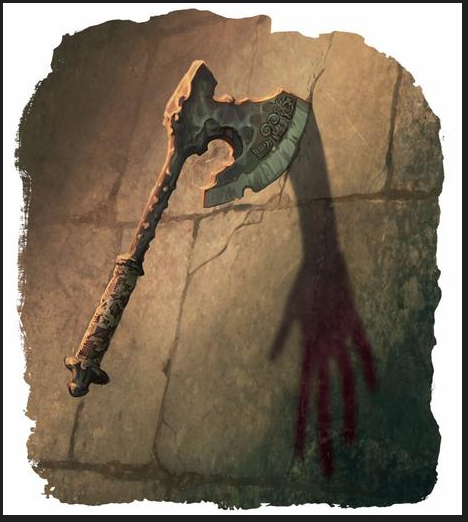
The axe Stone took is cursed.  In 5E it is a Berserker axe and a cursed axe +2 in 5E that does less damage against CE creatures and teleports into the owner's hand when encountering LG ones.  In both cases the axe has additional special properties owing to spell scrolls embedded in the handle.

I did not bother totaling up the gp value of the treasure found for the 5E encounter but I did for the 1E.  The reason is that in 1E AD&D, treasure counts toward XP at the rate of 1gp = 1XP in most cases.  

Note that XP for treasure is not actually awarded until the items are sold.

It's also worth noting that I curtailed the XP for Tloques in 1E because in that version of the game, the DM is expected to calculate XP based on the creature's stats but also the overall difficulty of the encounter.  The PCs easily slew the awakening vampire and so I cut the XP down drastically.  The typical value for a Vampire as calculated in 1E is about 8,000XP.

Impressions so far:

I have to admit that 5E is closer in difficulty to 1E than I was expecting overall.  That said, we can see that the 1E version is beginning to take its toll.  The 1E party has had to expend more party resources and is taking substantially more damage from the poison gas than in 5E, in which the party has not yet taken any.

The real difference is that 1E is much more DM-oriented in terms of handling things like skills and time while 5E is much more structured.  This can be a good thing if the DM would otherwise be inconsistent.  

I suspect the difficulty differences will become more evident as we go, but for now, there is no clear "winner."

Is 5E Really Easier Than 1E? Let's Do Science (Sort Of)! Part I

It isn't a secret or a surprise to anyone that the Dungeons & Dragons game has changed massively over the 50 years it has been around.  To be honest, what surprised me is how much it has not changed.  It is still possible to pick up a 1st Edition AD&D module and run it in a 5th Edition campaign without too much effort at all.  

But that isn't the question.  Grognards (like me) often complain and criticize 5E for being nerfed to the rooftops.  Now, I'm pretty sure that's an accurate criticism, but is it really?  I could be wrong.  I could be hilariously, wildly, laughably wrong.  (I know, I know, hard to believe but the truth is the truth!)

And yes, I know 5.5E is about to drop, but we'll just assume for now that there won't be a significant difference in difficulty level.

So I think it's time for as empirical a test as I can run.  This is a project that will likely take a very, very long time but I think even if it never gets finished we'll have an answer to the question:  Is 5E really easier than 1E?

The Setting:


So here's how I propose to test that.  I have two copies of the classic module The Hidden Shrine of Tamoachan.  One is the original version printed in 1980 by TSR for the Advanced Dungeons & Dragons game (1E).  


The other is the revision for 5th Edition published in the Tales From the Yawning Portal book in 2017 by Wizards of the Coast.  


I am using this module because as a DM, I ran my group through it once, but they lost interest in the dungeon because it was difficult and the nature of the adventure was one of simply going after the treasure, not being heroes that save the day, so I think they just got bored.

The Rules:


I will use two sets of characters:  one 1st Edition and one 5th Edition.  They will be as identical as I can make them.  Now, since I am going to solo this, I can't run it as a regular DM/players dynamic so here are the rules I will follow:

  • I will not use any foreknowledge of the module.  (I.E. No metagaming)
  • I will run both adventuring parties through the dungeon at the same pace, following the same route and making the same decisions.  
  • It will be possible for one party to deviate slightly from the other.  For example, one group may successfully find a secret door while the other does not.  I may make an exception and fudge the result if finding the secret door results in things becoming so different that it's no longer possible to compare the two adventures 1:1.
  • If a PC is killed then he/she is killed.  No fudging unless, as above, it results in the whole experiment being skewed.  
  • I will document the entire experiment here on this blog as I go.  I'll add my impressions along the way so that even if I never finish the module, we can at least get a pretty good idea of which way the results are going.
  • I am not going to make the hit and damage rolls 1:1 between the two.  Part of this test is to get a feel for which system is easier by determining whether it's easier to hit and do lots of damage.  Also, tactics will be different where PC abilities are different.  A 1E Fighter does not have an equivalent of the Second Wind ability, for example.

The Criteria:


So how will we judge which is easier?  It may be tempting to use a metric like XP to determine which party is more successful, but I don't think that would be very helpful.  The XP tables truly are on a different scale.  For example, a 1st level 5E fighter needs 300XP to reach level 2.  A 1st level 1E Fighter needs 2,000 XP to reach level 2.  The XP for monsters also varies so that wouldn't be helpful.  I think we'll go by the following:
  • Casualties.  If there are more deaths on one party than the other, that would suggest the answer as to which is more difficult.  Mind you, sometimes you can have just really bad luck on die rolls which could skewer the results, but we'll take note of that if it happens.
  • Treasure.  The Hidden Shrine of Tamoachan is primarily a dungeon crawl for treasure, so we can compare the haul from both parties.
  • Time.  It may be that both parties complete the dungeon without losing anybody or having a significant difference in treasure hauled.  In that case, the party that takes the most in-game time will be the tiebreaker.

Conversion notes, 5E to 1E

  • I will retain the level and proportion of XP.  So if a character is leel 5 and is 50% of the way to level 6, then the 1E character will also.
  • Ability scores will be retained.
  • Equipment will be the same.  If a particular piece of equipment exists on one edition and not the other, then the closest replacement will be used.
  • Hit points will be the same, as long as it's mathematically possible for a character of the same level in both editions to be the same.  That isn't always the case.  For example, a 2nd level Magic-User can have an absolute maximum of 12 Hit Points in 1E.  In 2E, a level 2 Wizard can have up to 22.  In those cases, the PC with too many Hit Points will have their Hit Point max reduced to what is possible. 
  • The Paladin class, in 1E, was originally a subclass of Fighter.  It was later changed to be a subclass of Cavalier in the Unearthed Arcana book.  I will use the Fighter version.  This version is more similar to the later versions orf Paladin since the Cavalier did not make it past 1E (Except as a Fighter kit in 2E, and the less said about that the better... And I'm sure there's a 3E Prestige Class for it but... yeah.)
  • The Paladin class in 1E requires a minimum Wisdom score of 13.  My 5E Paladin does not meet that requirement.  Since the Paladin can still mechanically function in 1E with a Wis of 9 I am going to overlook that for the sake of keeping the characters as similar as possible.  It is worth noting, however.
  • In listing the PCs below, for Class and level, I'll use the format "Class (Subclass)" for 5E and "Class (Level Title)" for 1E
  • If a PC is of a race that isn't playable in 1E, they'll default to Elf.

Our Heroes

I'm not going to list out every single aspect of the characters below for brevity, but you'll notice some differences in Hit Points and such.  That's because Ability scores give different bonuses in each of these two editions (5E bonuses are always higher.)

So, without further ado, let's meet our champions.


The Party Leader:

    Mikhael of Lyonesse                            
    Level 5 Human Paladin (Oath of the Ancients)             Level 5 Human Paladin (Warder)
    Current XP: 11,673                                                        Current XP:  37,350
    Armor Class: 21                                                             Armor Class: -1
    Proficiency Bonus: +3                                                   THAC0: 16
    Alignment: Lawful Good                                               Alignment: Lawful Good
    Hit Point Maximum: 56                                                 Hit Points: 56
    Main Weapon: Longsword +1                                       Main Weapon: Longsword +1


Combat Support:

    Stone, Lord of Utreshimon's End
    Level 5 Human Fighter (Battlemaster)                          Level 5 Human Fighter (Swashbuckler)
    Current XP: 12,466                                                       Current XP: 31,165
    Armor Class: 20                                                             Armor Class: 2
    Proficiency Bonus: +3                                                   THAC0: 16
    Alignment: Lawful Neutral                                            Alignment: Lawful Neutral
    Hit Point Maximum: 55                                                 Hit Points: 50
    Main Weapon: Warhammer +2  (2h)                             Main Weapon: Lucern Hammer +2

Healer:

    Nathair Zmeya 
    Level 6 Yuan-Ti Cleric (Trickery)                                 Level 6 Elf Cleric (Canoness)
    Current XP: 22,664                                                       Current XP: 54,196
    Armor Class: 19                                                             Armor Class: 2
    Proficiency Bonus: +3                                `                 THAC0: 18
    Alignment: Chaotic Neutral                                          Alignment: Chaotic Neutral
    Hit Point Maximum: 53                                                Hit Points: 53
    Main Weapon:  Mace +1                                               Main Weapon: Horseman's Mace +1

Magical Support:

    Weyland Yutani   
    Level 5 Half-Elf Wizard (Necromancer)                        Level 5 Half-Elf Magic-User (Thaumaturgist)
    Current XP: 13,026                                                         Current XP: 37,217
    Armor Class: 17                                                              Armor Class: 5
    Proficiency Bonus: +3                                                    THAC0: 20
    Alignment: Chaotic Good                                               Alignment: Chaotic Good
    Hit Point Maximum: 28                                                  Hit Points: 20   
    Main Weapon: Quarterstaff                                             Main Weapon: Quarter Staff

Specialist:

    Stig The Wanderer                                                           
    Level 5 Human Rogue (Thief)                                        Level 5 Human Thief (Burglar)
    Current XP: 12,874                                                         Current XP: 18,391
    Armor Class: 18                                                              Armor Class: 3
    Proficiency Bonus: +3                                                    THAC0: 19
    Alignment: Chaotic Neutral                                            Alignment: Chaotic Neutral
    Hit Point Maximum: 39                                                  Hit Points: 30
    Main Weapon: Shortsword +1                                        Short Sword +1

Support:

    Merry Morton the Musical Minstrel of Mirabar
    Level 7 Human Bard (Lore)                                           Level 7 Human Bard (Troubador)
    Current XP: 30,660                                                        Current XP: 54,105
    Armor Class: 16                                                              Armor Class: 6
    Proficiency Bonus: +3                                                    THAC0: 16
    Alignment: Neutral Good                                               Alignment: Neutral Good
    Hit Point Maximum: 61                                                 Hit Points: 56
    Main Weapon: Rapier +1                                               Main Weapon: Long Sword +1

For purposes of this write-up, I'll begin at the entrance to the dungeon in Part II!


Wednesday, July 3, 2024

Mediocre Players and the Ego Game

Back when my favorite FLGS (Friendly Local Gaming Store) DropZone was open, I'd go there once a week after work to game as it was more or less on the way.  None of my friends were usually there but occasionally I'd manage a pickup game.  

One player in particular, I remember playing against.  (I don't remember his name now.)  I played him a few games in Firestorm Armada and Infinity.  He beat me every single time in both games.  I'm not even talking about close matches I mean I received a full-on drubbing every time.

Now, at first that didn't bother me.  I was new to those games and this guy had experience so of course he would be expected to win.  My objective was less about winning and more about learning.  I also hoped to get some helpful tips from a better player.  Well, that never happened.  He never offered me constructive criticism after a game, he never made suggestions on how I could improve my force or tactics.  He was just happy to defeat me time after time.

The last time I played him, I remember one of the staff commenting to him, jokingly, "Beating up on the new guys again, I see."  He reacted with a shrug.  That was pretty telling.  I realized then that he wasn't going to be a mentor in any way, shape, or form.  I'd seen him play others and he was mediocre against other experienced players, and I never saw him beat one of them.  

So what was going on here?  Well, from what I could tell, he was a mediocre gamer who had developed a habit of playing new players because he could beat them easily.  That was his reputation.  He wasn't being nice.  He wasn't being friendly.  He was just some guy whose ego needed easy wins, and newbies like me were the means to get that.

I don't harbor any resentment toward the guy.  At least I got to play some games.  The downside of the culture at DropZone was that it tended to be very clique-ish.  Since none of the people in my regular gaming circle were there when I would go after work, I was basically the odd man out.  I continued to go there after work once a week but I never played that guy again, even when he offered me a game.  I didn't tell him why, just made some excuse about having to leave soon.  He wasn't looking for a game that would bring mutual enjoyment.  He wasn't looking to play me out of a sense of friendship.  He only wanted to play me because he knew he'd be guaranteed to win.  I honestly felt a little sorry for him.   

If I could say something to that guy, and to other gamers like him, I'd say something like this:

Hello.  I'm glad we share an interest in the same game, and it would be cool to play you again sometime after I have gained more experience and sharpened up my skills.  In the meantime, I have to be honest, it gets old feeling like your personal punching bag.  Gaming is fun whether you win or lose, but there is an element of sportsmanship that I feel is absent when I play you.  You aren't playing for fun, you're playing for your ego.  It's almost as if you're afraid to offer me some friendly advice because I may someday start to beat you more often than not.  That's a shame, because it makes you someone who isn't fun to play against.  It's been a long time and maybe you're different now, but sadly I remember you as being kind of a jerk.  No hard feelings, and honestly I did learn from you, just not anything in game.  I learned to be more careful about who I play, and stick with opponents who will whip my butt in a game I'm new to, but also give me some friendly advice so I can improve my game, which is a benefit to both sides.  I hope you can see that.  If not, that's a problem you should work on.

Typically when I play a game, if I find myself winning most of the time, I'm likely to make suggestions to my opponent for next time.  Of course, sometimes people are salty right after a defeat but if they seem open to the discussion, then we have it.  Isn't that what it's about?  Getting some games in, making friends, improving?

When I'm bad at a game, I want to play opponents who will help me improve.  If you're afraid of your opponent getting better, I'd gently suggest you think about why that is.

Tuesday, June 4, 2024

WWAD

In day-to-day life, we sometimes have to make decisions and generally, we can't go wrong by asking ourselves "WWJD?" (What Would Jesus Do?)

But that's day-to-day life. When wargaming, something different is called for.

I've been a history buff to the extent that studying history is about as much fun for me as any of my wargaming. I've mostly focused on Medieval History but for a time I'd gone classical, and the subject of my most intense study had been Alexander of Macedonia, the greatest military commander the world has ever known.

I was recently overwhelmed with awe at a study of his victory at Gaugamela and the out-of-the-box thinking that allowed an army of 50,000 Macedonians to defeat a Persian army estimated to be anywhere from two to five times its size.

And so, when standing at the wargame table, with my opponent on the other side presenting me with a tactical problem, there's really only one question:

What Would Alexander Do?

We had been running a campaign for a couple of years in Warhammer (Blood in the Badlands, which I've mentioned before) and there was only one player who was undefeated in the campaign... and I was playing him in one of the rounds. He'd beaten me before, but it was payback time. And so, as his horde of chaos warriors came across the table toward my gallant knights? I asked myself "What Would Alexander Do?"

He'd set up to look like he was going to do exactly what his enemy expected, and then surprise him with sudden, unexpected cavalry strikes.

... and it worked.

I don't say this to brag. I say it because I've noticed a sad trend in gaming where people spend so much more time looking at army lists and reading stats and doing math than they do thinking about tactics. Read fewer army lists. Read more Sun-Tzu. Tactics, not numbers. As long as my opponents keep fixating on numbers and not on tactics I'll drive them off the table every time. It's the tactics that win, not the stats. I don't regard myself as much of a tactician, but even simple tactics will always win against someone who isn't using tactics at all.

Don't ask "What units are best from this book?" Ask yourself "What would Alexander do with all of these units?"

In one game, my opponent's Dark Angels (Space Marines) had a brand new rulebook with power creep and awesome stats, heavy-hitting units, and lots and lots of special abilities. My Black Templars (Space Marines) were running a book that was 10 years old at the time and didn't get much for their points. How do I defeat a superior army?

What would Alexander do?

He'd leverage his strengths against his opponent's weaknesses and drive a lever into the crack. The victory was so one-sided that my opponent conceded at the beginning of the 3rd turn. Warhammer 40,000 is a 6+ turn game.

Put away the army list. Read Sun-Tzu. Put aside the stats. Read Arrian.

Any fool can win a game with superior units. Win with inferior ones. Win whether your units are better or not. Win because you're a general, not a mathematician. Let the credit for your victories be YOURS, and not the guy's who wrote the rules you exploited to get there. Don't do what the ordinary gamer would do.

Do what Alexander would do.

Probability. A Rant

 Today's rant is about dice.

I play with a lot of different gamers, some fun, some not so much. Everybody approaches their gaming differently, but one thing is sure, we all game using some sort of random number generator. In most games, that's dice. In Malifaux, it's cards. We understand, intellectually, that if I'm rolling a 20-sided die and I need at least a 15 to succeed, that's a little better than a 1 in 4 chance. Not great odds, right?

And yet, on the table, people are astonished when they aren't rolling crits every single round.

"Man that sucks! I only made, like, a third of my ward saves! These dice frickin' hate me." Well, Einstein, your ward save is a 5+ on 6-sided dice. A third is exactly what you should expect. The probability of rolling a 5 or 6 on a d6 is exactly 1/3. So yeah, the dice are doing what they're supposed to be doing.

Here's one I got once:

"The spell landed? But I have a 65% magic resistance!" Yep, it landed. Saving throw, please. "Even with my magic resistance?" Yes, even with your magic resistance. 65% odds do favor you, but it should still not be such a major surprise when it doesn't go your way. 2/3 of the time you'll make it, the rest of the time you won't. It really irritates me when a player regards 65% as being about as reliable as 100%, and then questions whether I'm DMming fairly.

Same player:

"What? He saved against my spell?" Yep. "  Well, you know how the saving throw works, right?" Yep. "Are you sure?" Yep.

He'd cast a spell at an enemy and the enemy, who needed a 5 or better on a d20 to save, made the roll. The spell had no effect. "Sheesh, I can't believe he made that." Another lesson in probability, boys and girls... If you need a 5 or better on a d20 to make a save, that's 80% likely to succeed. Good odds, definitely in the target's favor, and far from a huge shock when it's made. Certainly not enough to start a rules-lawyering session in mid-game over it.

Same player (AGAIN):

"He hit me? But my Armor Class is -1!" (In AD&D, low AC is good. a -1 AC in 2nd Edition is equivalent to a 21 AC in 5th Edition.) In the case I'm thinking of, the enemy monster was a 9 HD beast with a THAC0 of 12. That means on a d20 it needed a 13 to hit an AC -1. Adding its bonus for Strength and the magical weapon, it only needed 9. It was likely to hit. I always fail to understand why people are surprised to be hit when their attacker has better-than-average odds of making that hit.

We assemble our characters, our armies, our whatever for gaming and we have to think about the odds when the time comes for the dice to hit the table. You've got to be realistic about this. When the odds don't favor you (or even when they do) and the dice don't roll your way, complaining about it and registering shock actually drains the fun away from others, because it sounds too much like whining. We're playing games that use random number generators. That means a certain amount of gameplay is simply outside of your control. This is meant to account for all the little factors that can't be covered by the rules. Sometimes even when the odds are in your favor bad things can still happen.

I remember a game once in Warhammer where my Bretonnian knights charged an enemy Dwarf unit and scored 4 hits. Each hit only needed a 2+ to cause damage. I rolled 4 '1's.  Another time I had a unit of Black Templars that were 3" from an enemy unit.  I declared a charge.  I rolled snake eyes.  The charge failed.

Frustrating?  Yeah, but what can you do? Sometimes you'll roll all crits. Sometimes they'll all fail no matter how good your odds are. Now mind you, this example is one in which I had a reasonable expectation of getting 3 - 4 successes. This is why I find it so silly for people to be surprised when the dice provide exactly the results the math expects.

Gamer's War Stories

 This is a pet peeve. No... this is a berserk button.

War Stories.

Have you ever been talking about a game with another person and at some point you get caught up in the soul-sucking tarpit that is the Gamer's War Story?

Before I go any further, I want to differentiate between an appropriate anecdote and a Gamer's War Story. It's important. This is an example of an appropriate anecdote.

"So I was facing this High Elf player in the tournament. He'd decided that since I had an all cavalry army he'd bunker his main unit inside a circle of fencing, expecting me to decline the charge. Well, he underestimated how crazy I can be and I got him in the front and flank with a double charge.  Hehe, I lost two knights, but I blew his general's unit off the table."

That story was short, had a point, was a little self-aggrandizing but not over the top, and generally an acceptable anecdote.

A good war story doesn't have to be short. It can be longer as long as it keeps the audience's interest either through humor, 2-way discussion, or if it's just plain necessary to get to the point. Risky but doable, the long story can really pay off. If I may toot my own horn, I direct the reader to the "Blood in the Badlands" posts for an example.

But here... here is an example of a Gamer's War Story:

"So I once had this level 15 paladin that had this awesome Vorpal Holy Dancing Luckblade +25 with a -30 bonus to my AC! It was so awesome! I'd like, rip orcs in half with it and just pile up the bodies! It's so funny... in this last adventure, the DM sent a red dragon after us. So we fought it in like a cave or something and it was blasting the party and while the other PCs were bleeding hit points my paladin was basically roasting marshmallows because I auto-saved all my saving throws because of that armor and this item I got in another campaign where if I successfully make a save vs. Breath Weapon I take zero damage. It's cool. So anyway we kept hacking at the dragon and finally, we killed it. In the treasure hoard, there was a bunch of stuff and I got a shield +3 with Ethereal, so I could become like a ghost 3 times a day. So awesome. So then we kept going and in the next room, there were like a thousand kobolds. We killed all of them and the DM was so pissed because he just couldn't kill us off. So then there was a horde of Giants in a chasm under that and we started plucking them off with bows and arrows and they couldn't climb the walls to get to us so we just sat there all day plinking them until they were all dead. Then we had to get down there and the party had to find some rope but I just jumped down because my hit points were so high and I had a ring of feather fall I just jumped down and by the time they got down there, I had already collected up all the treasure and was sorting it out in piles. Then we had to go fight the main bad guy in the next chamber and he was like some big evil Necromancer dude and could summon like, ten zombies a round and that fight was so fun... dude check it out... so I ran right up the middle and WHOMP I sliced him in half with my awesome sword while everybody else was dealing with zombies and it was so funny because the DM was getting all red in the face and we were laughing and the treasure was so great I leveled like three times from the XP. So I decided to put my new weapon proficiency slots toward a lance because in the adventure before that, I got a magical steed that can, like, move 480 per round and has +2 to hit when it attacks and can carry infinite weight because it has magical barding of encumbrance so I can carry an elephant in it because the horse has infinite capacity and I have gauntlets of Titan strength so literally I could be riding down main street with an elephant in my arms. And I could be like 'Here, hold this!' and throw it at someone. So cool. OH, you know what's awesome to play? A druid! I had this druid character once who..."

If you've ever told a story like this, I GUARANTEE by the time you got about halfway through that, the person you were talking to was fantasizing about tearing your tongue out and hog-tying you with it.

Please.... please stop. Just.... stop.

I had to sit through a Warhammer story like that once. I'll spare you the details, but it was like listening to a playback of an announcer calling plays during a football game, only not interesting at all and with no visuals.

Now, I understand that sometimes, people don't realize they're doing this. Here are some helpful hints to know when you might be telling a Gamer's War Story

  • The audience hasn't said a word in the last 10 minutes.
  • The audience has stopped making eye contact with you.
  • You're jumping from story to story without any feedback from your audience.
  • The audience's body language is signaling severe discomfort and/or stress
  • If you have to tell your audience that something is "so funny" because they aren't laughing... then it isn't funny.
  • If you're animated and excited, and your audience looks like their shoes are too tight

Seriously.

This sort of phenomenon can also happen when it isn't a war story, but rather a far too detailed explanation of some aspect of a game. For example, when I first heard of the game Mage: The Ascension, I had to sit for 45 minutes while a guy told me about every. single. character. type in the game. "Basically, it's a ...." and then 5 paragraphs worth of talk. For each one. Pro tip: If it takes you 5 paragraphs to explain something, you've gone well beyond "basically." If I really want to know this stuff, I'll look it up in the rulebook myself. I'm not going to remember the sermon in any case.

If you've been speaking about a story for a solid 30 seconds without any feedback from your audience, you're in severe danger of being guilty of this. If your audience is laughing, asking questions, or seems interested by their body language, then proceed... But if they aren't. WRAP IT UP IMMEDIATELY. I don't care how cool you think your 23rd Level Wizard is or how awesome your horde unit of Beastmen Minotaurs is; if you can't convey the awesome in a single short paragraph or less, they're not going to be able to appreciate it anyway.

Bottom line... This is a form of conversation hogging and is considered very rude. I've never seen a Gamer's War Story that was actually prompted. Usually, the speaker just starts off with one little thing but gets carried away. I was guilty of this myself when I was young, I admit it... But I've experienced this phenomenon from men well into their 30s, so it isn't just a youth thing.

If someone wants to hear about your level 15 paladin, they'll ask. If they want to hear more, they'll prompt you. If they're interested in the story, their body language will encourage you to go on. BE AWARE of these signs, and people will like you more. At the very least, they won't be imagining shocking violence directed toward you.

Please. Please don't tell Gamer's War Stories. I don't want to have to punch you in the soul.

Primadonna Gamers, Cheese, and why Campaigns Hurt: A Rant

So, having failed to learn our lesson from the drama of last time, my gaming club once again embarked upon a campaign. This one was for Warhammer 40K and was, like the Blood in the Badlands, based on official published rules.

Well, like the previous time, it wasn't a month in before the whining began. "Our faction didn't get enough access to special facilities." "Nobody's telling us what's going on (despite there being a page and several threads as resources within our site)" "The teams are imbalanced." At first, no major problems, but now, suddenly people were dropping out for various reasons.

One of them dropped because he wasn't expecting a tournament mentality in the campaign, but the first opponent he played was super competitive and fielded a cheese list.

For those who don't know, cheese is what we call something in gaming where the player leverages the rules to absolutely maximize the power level of his character/army. There's no fluff, no narrative, no sportsmanship. It's all about trying to create the perfect "I win" button. This attitude is mostly seen in tournaments but does find its way into casual gaming as well.

And yes, we had a player or two with that mentality.

There isn't anything wrong with being competitive... That's what gaming is about... But there's a big difference between friendly competition and "win at all costs." One is fun, the other is stressful, in my opinion.

So we started up a discussion and even though no names were mentioned, the super-competitive player became defensive and started talking about how his play style was clearly incompatible with the group, and that it meant there was no point in gaming with us. I find that mentality utterly bewildering. Why is it so hard to play a casual game? Why does every single game have to be a struggle for ego dominance? Why does it have to be a test of one's self every time the dice hit the table?

I suggested to him that he get his chance for hyper-competitive gaming at tournaments where that approach fits better, and be more relaxed and casual when gaming with us. Unreasonable? I didn't think so.

But apparently, he just doesn't have fun when he's not at maximum throttle, being as full-on as he can be. Even that I think I could understand somewhat, but the way it's explained to us comes across as he just played at a higher level than we do.

That mentality REALLY irritates me. Especially coming from someone whose idea of a good Warhammer player is someone who has a cheese list, as opposed to someone who uses strategy and tactics well.

Whatever game you play, whether it be Warhammer, Dungeons & Dragons, or Magic: The Gathering... there's always a way to build an army/character/deck that's "broken," meaning it's incredibly hard to beat with no player skill required. If you play a lot of Magic and you have a deck that's a super killer tournament winner, and it's equally effective if a complete newbie can use it and get wins, then what you have there is cheese. If you have a killer Druid build for Dungeons & Dragons that even a new player can kill all the monsters with, or an army in Warhammer that steamrolls all opposition even if a guy who has never played Warhammer before is running it... Congrats. You've made cheese.

What that means is you might be really good at building a killer combo, but not necessarily good at playing the game.

Back in my Warhammer days I often griped that my army in Warhammer (Bretonnia) was the oldest of the books and due to power creep was one of the weakest. The thing is, it was also an opportunity for me to sharpen my skills. If I had this old, underpowered army and I could beat you with your new, shiny, powerful list, then that means I played a better tactical game. This is my goal. And I can easily throttle that so I can play a new player and he will still have fun, or I can go to max power for tournaments and hold my own. I just find it to be an overall better way to game, but that's just me.

Grown. Men.